

//Alberta Construction Market 2026: Why Pre-Construction Discipline Wins
Alberta Construction Market 2026: Why Pre-Construction Discipline Wins
Tags : AlbertaConstruction Project Managementfeasibility study Albertapre-construction planning Alberta
Alberta housing starts are cooling from their 2025 record. ATB Financial expects about 45,000 starts in 2026, down from 54,858, and builder confidence across Canada has fallen. Many people read that as a weak market. I don’t. I added a new line to the risk register I use to assess projects in 2026:
- Condition: Alberta housing starts slowing
- Probability: confirmed
- Impact: high
- Owner: every project manager and developer in the province
- Status: misread by most
- Next step: stop calling it a weak market
I wrote the last line as a provocation, then looked at the data and kept it. This is not a weak market. It is a more selective one. And in a selective market, the projects that move forward share one thing: better pre-construction discipline.
A selective market, not a weak one
Even after the expected decline, Alberta’s 2026 starts would remain about a third above the ten-year average. Construction employment in Alberta grew by about 4,700 jobs in early 2026, the largest gain among the provinces cited by the Canadian Construction Association. What has changed is not the volume of activity but the tolerance for weak projects. Owners approve fewer projects; lenders ask for stronger evidence; buyers and tenants have more choice.
What successful projects have in common
Reviewing project briefs this year, I see a clear pattern. The ones with solid surveys, accurate as-built drawings and a clear scope move to the next phase. The ones without them do not. Three trends stand out:
- Owners approve fewer projects, but better scoped ones. A vague brief is no longer enough to secure approval or financing.
- General contractors win bids with tighter documentation, not only lower prices. A well-documented bid signals lower risk to the owner.
- Feasibility is no longer a formality. It has become the filter that decides which projects proceed.
The risk register as a planning tool
A risk register is a simple table that lists each risk, its probability, its impact, who owns it and what will be done about it. It is often prepared for large projects and then forgotten. Used properly, it is one of the most effective tools in pre-construction, because it forces the team to think about what could go wrong before money is committed.
Typical risks for Alberta projects in 2026
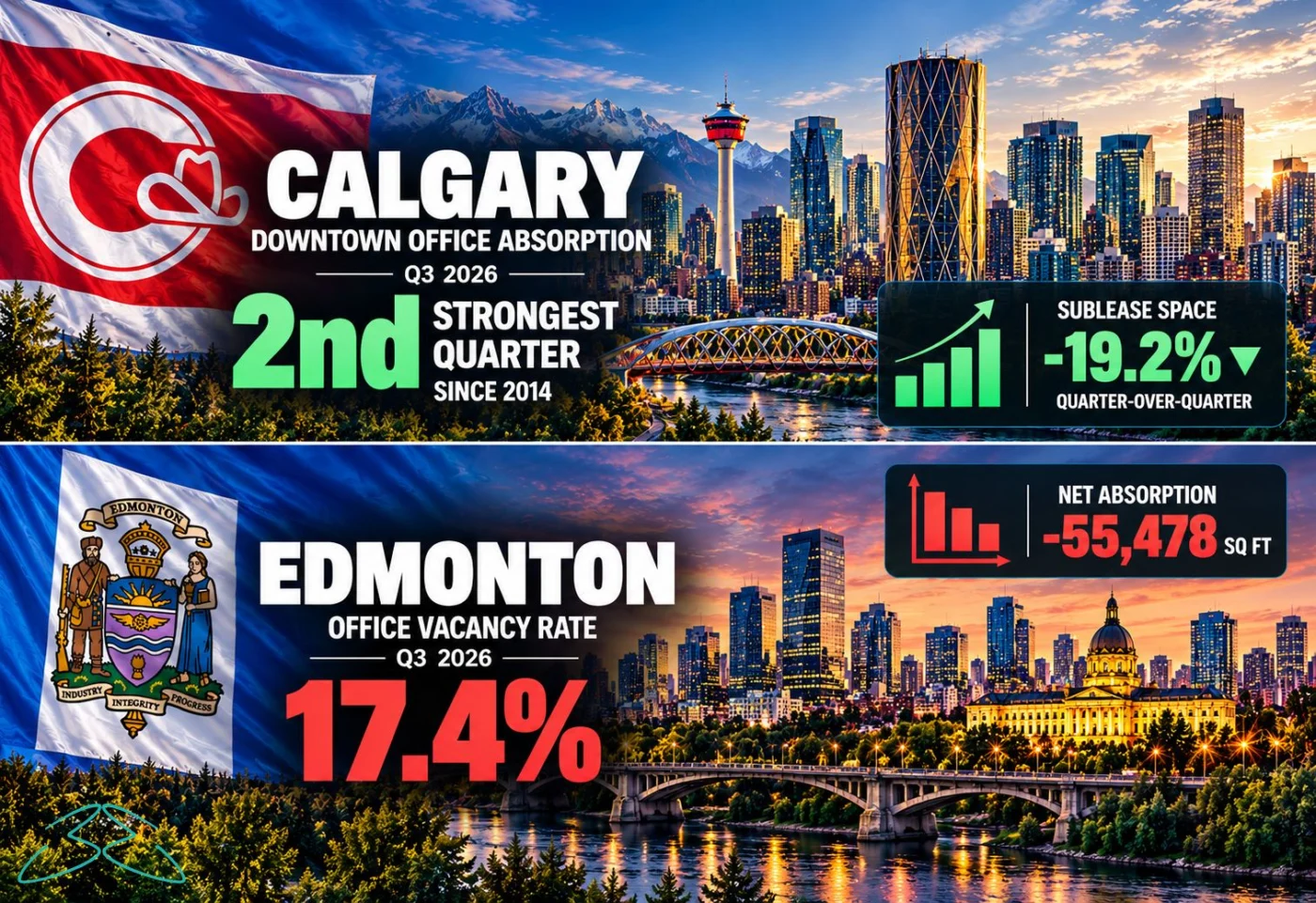
- Market risk: slower absorption in apartments and row homes; rising rental vacancy in Calgary.
- Cost risk: construction prices up about 4% year over year nationally at the end of 2025; possible tariff effects on some materials.
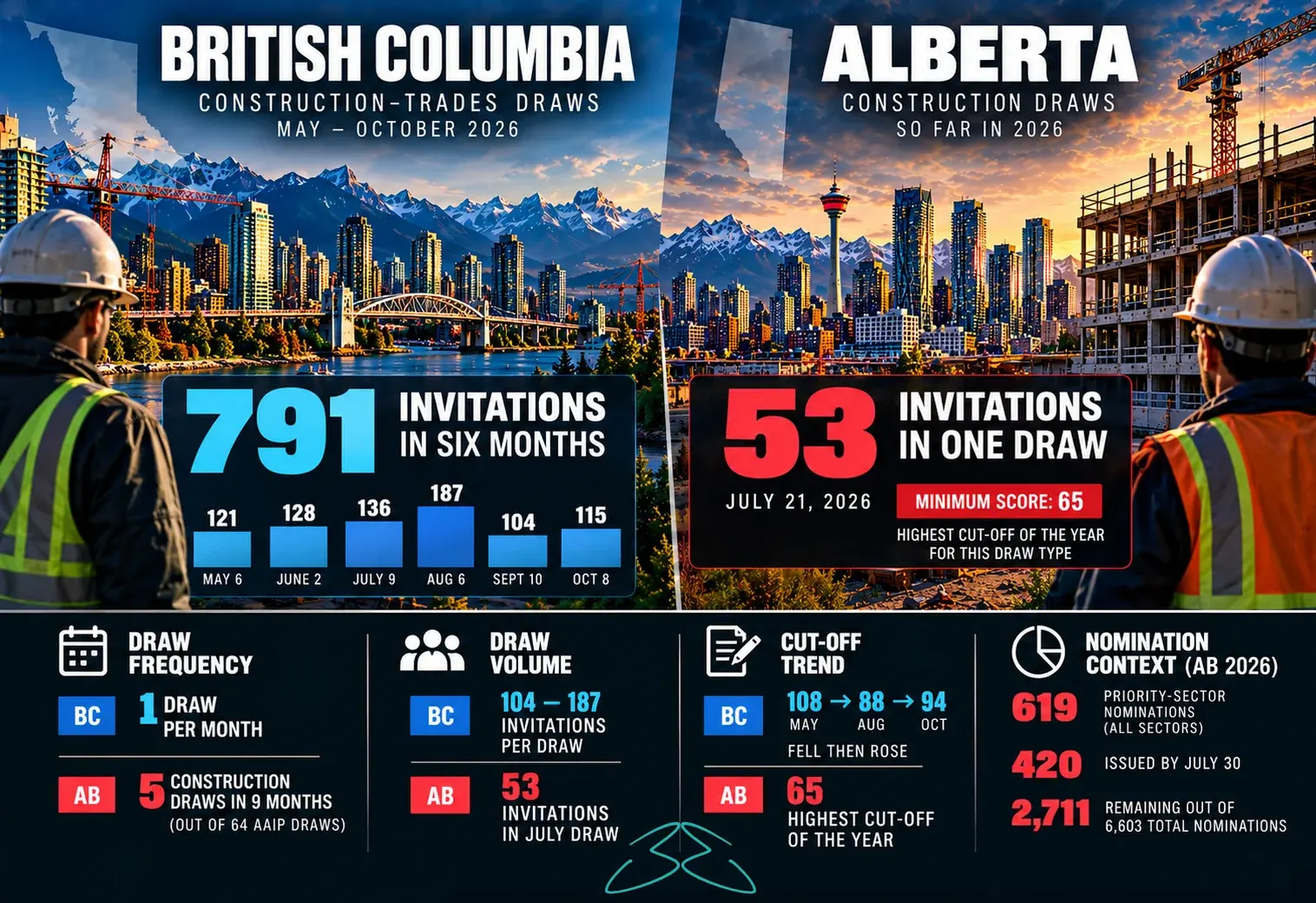
- Labour risk: specialty trade vacancies and an ageing workforce, highlighted by ATB.
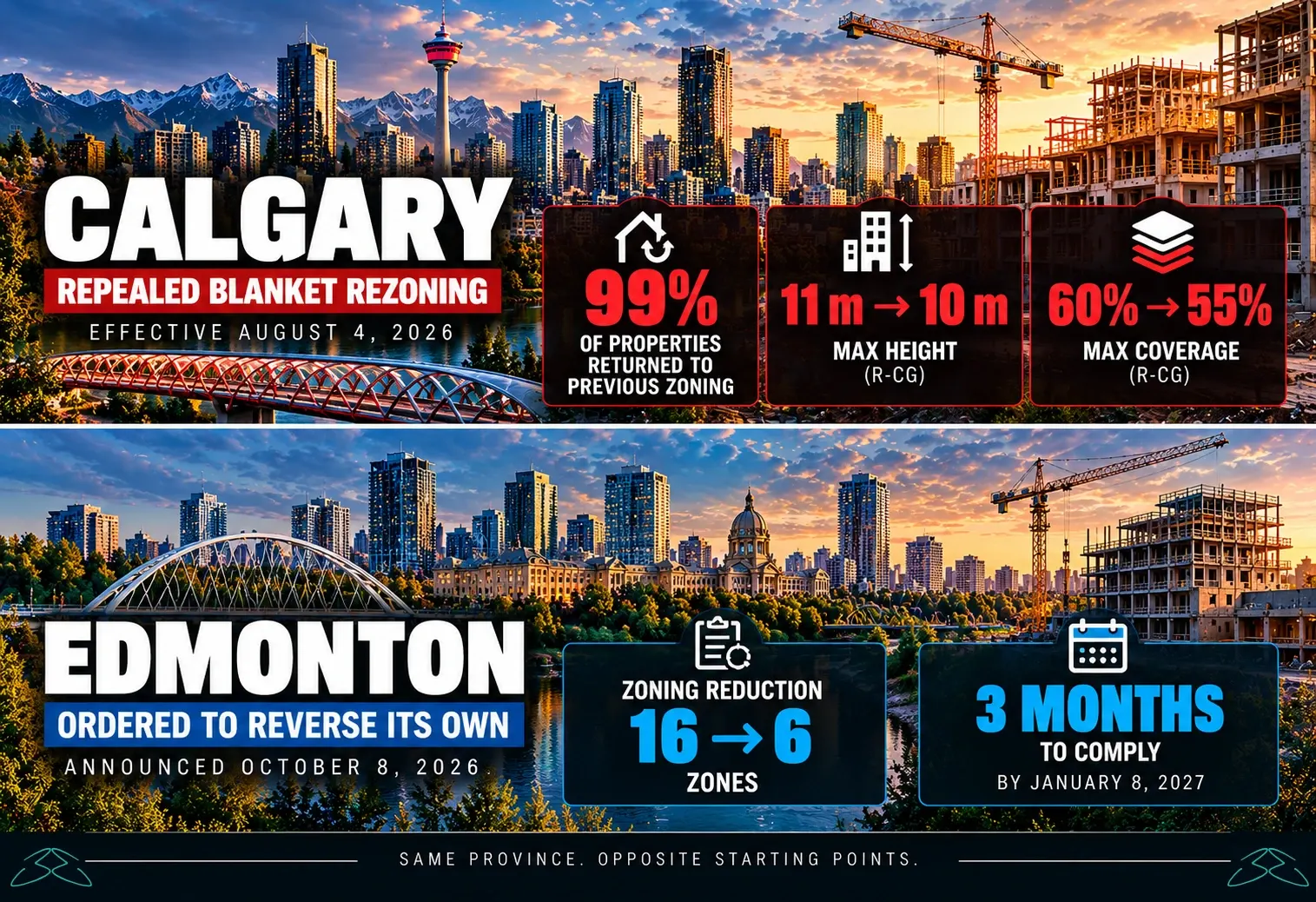
- Regulatory risk: zoning changes, such as Calgary’s 2026 repeal of citywide rezoning, and permit timelines.
- Site risk: unknown existing conditions, soils and services.
- Design risk: incomplete design at tender and late changes.
- Financing risk: interest rates, presale thresholds and lender requirements.
For each risk, the register should name an owner and a concrete action: further investigation, design change, contract clause, insurance, contingency or monitoring.
The pre-construction disciplines that matter most
Accurate surveys
Measured surveys of sites and existing buildings remove one of the largest sources of uncertainty. For renovations and fit-outs, an as-built survey is the foundation of every reliable estimate.
Clear scope
A written scope with inclusions, exclusions and provisional sums turns a concept into something that can be priced and managed.
Realistic feasibility
Current prices, rents, absorption and costs, not last year’s assumptions, tested against downside scenarios.
Integrated schedule
Permits, design, procurement and construction planned together, with long-lead items identified early.
Change control
A design freeze date and a written process for approving changes protect the budget once work starts.
Why preparation beats volume
In a boom, the developers who build the most often win, because rising prices cover mistakes. In a selective market, Alberta rewards those who plan best. The best projects are not necessarily the ones with the biggest budgets; they are the ones with the fewest surprises. Every surprise avoided in pre-construction is margin protected in construction.
Most developers are still focused on finding the next opportunity. The ones closing deals in 2026 are focused on the quality of their preparation.
A simple monthly review
A risk register only works if it is reviewed. On the projects I manage, the register is updated at least monthly during pre-construction and at every major milestone during construction. Each review asks four questions: Which risks have changed probability or impact? Which actions are overdue? Which new risks have appeared? Which risks can be closed? The review takes less than an hour, but it keeps the whole team focused on what could hurt the project next, rather than only on what went wrong last week. It also creates a written record that is invaluable when explaining decisions to owners, lenders or investors.
How to start on your next project
- Hold a one-hour risk workshop with the owner, designer and project manager.
- List the ten most important risks and rate probability and impact.
- Assign an owner and an action to each.
- Link contingency to the identified risks.
- Review the register monthly in pre-construction and at each major milestone during construction.
The bottom line
Alberta’s housing starts are cooling, but the market is not weak. It is selective, and selectivity rewards discipline. Surveys, scope, feasibility, integrated scheduling and a living risk register are what separate projects that move forward from those that stall.
If you want help structuring the pre-construction phase of a project, see my construction project management services, read why budgets fail before site, or contact me. What are you seeing on your end: are owners getting more selective with approvals?
Frequently asked questions
What is a construction risk register?
A document that lists project risks with their probability, impact, owner and planned response, used to manage uncertainty throughout the project.
Are Alberta housing starts falling in 2026?
Yes, from a record 54,858 in 2025 to an expected 45,000 in 2026 according to ATB Financial, which is still well above the ten-year average.
What does pre-construction include?
Feasibility, surveys, design development, scope definition, cost planning, permits, procurement planning, scheduling and risk management before construction starts.
Sources
- ATB Financial: Housing starts in Alberta, December 2025
- Canadian Construction Association: Economic Report, Spring 2026
- ATB Financial: Who is going to build? Part 2
- 153 views
- 1 Comment

Eros Belotti 01.

Eros belotti
Construction project manager with over 20 years of experience in Europe and the Canary Islands. Specialized in modular housing, container construction, real estate development and international project management. Founder of Reforma Vivienda Tenerife and Donkey Lab.
May 29, 2026 /
One thing I keep seeing in pre-construction phases: the projects that stall aren’t missing budget or demand — they’re missing reliable data at the start.
Inaccurate as-builts. Incomplete site surveys. Scope defined too late.
When the market was growing fast, those gaps were absorbed by momentum. In a more selective market, they become the reason a project doesn’t move forward.
The shift isn’t dramatic. It’s just less forgiving.