
Alberta Construction Is Rotating: Where Demand Is Moving in 2026
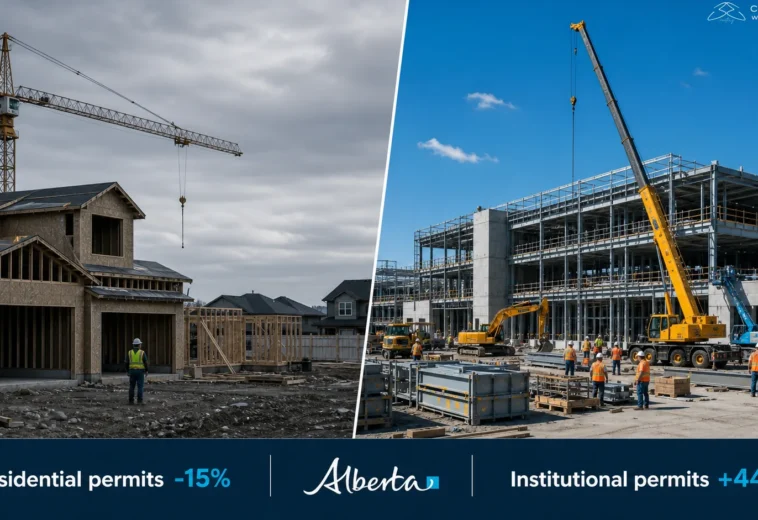
If you only track Alberta’s residential slowdown, you are watching the wrong market. Housing starts in the province are falling from their 2025 record, but construction demand has not disappeared. It is moving. Capital, crews and civil capacity are shifting from housing toward power, industrial and institutional work: hospitals and schools, energy infrastructure, data centres and the facilities behind them.
This article sets out where demand is moving in 2026, what the evidence shows and how firms can reposition their feasibility work, bidding capacity and partnerships for the next 18 months.
Residential: cooling from a record
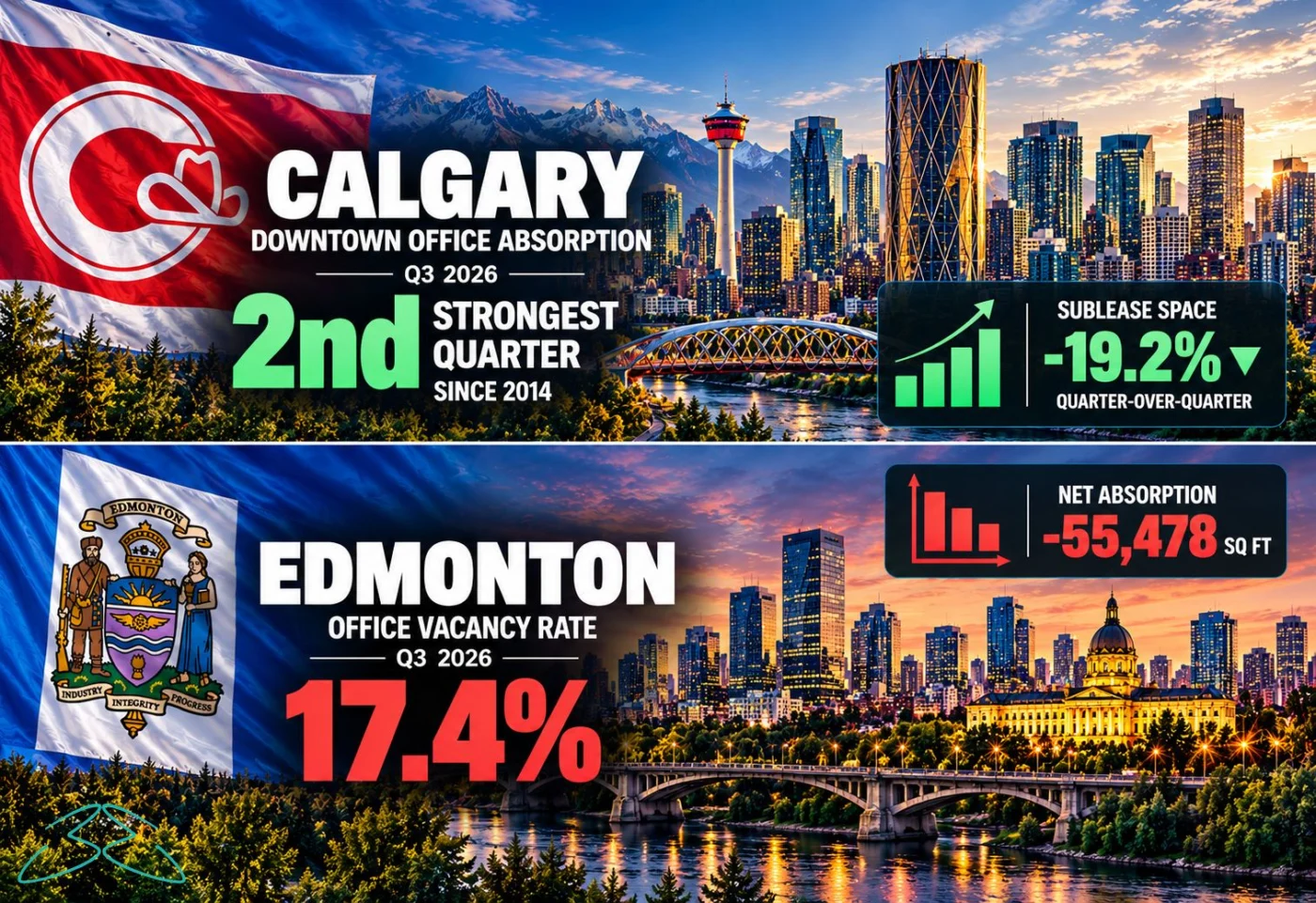
Alberta recorded 54,858 housing starts in 2025. In May 2026, CMHC reported Alberta’s monthly starts down 15% year over year, with Calgary down 28% and Edmonton down 14% year to date. CMHC’s mid-year outlook forecasts Calgary starts falling to about 22,000 in 2026 and Edmonton to about 16,000, with further declines to 2028. The decline is concentrated in multi-unit and rental construction.
Where demand is going
Institutional
Alberta’s Budget 2026 capital plan commits $28.3 billion over three years, including $4.9 billion for health care capacity and $3.3 billion for schools. BuildForce Canada’s 2026 to 2035 outlook projects employment in industrial, commercial and institutional building to rise 31% by 2035, driven partly by projects such as the Red Deer Regional Hospital expansion and the School Construction Accelerator Program.
Power and data centres
In July 2026 Meta confirmed a data centre investment of more than $13 billion in Sturgeon County, north of Edmonton, with over 3,000 construction jobs at peak and a dedicated natural gas power plant estimated at $4.6 billion. According to the provincial government, about 19,565 MW of new data centre load was seeking connection on the Alberta Electric System Operator’s large-load list at the end of July 2026. These are requests, not approvals, but even a fraction would reshape construction demand.
Industrial and engineering
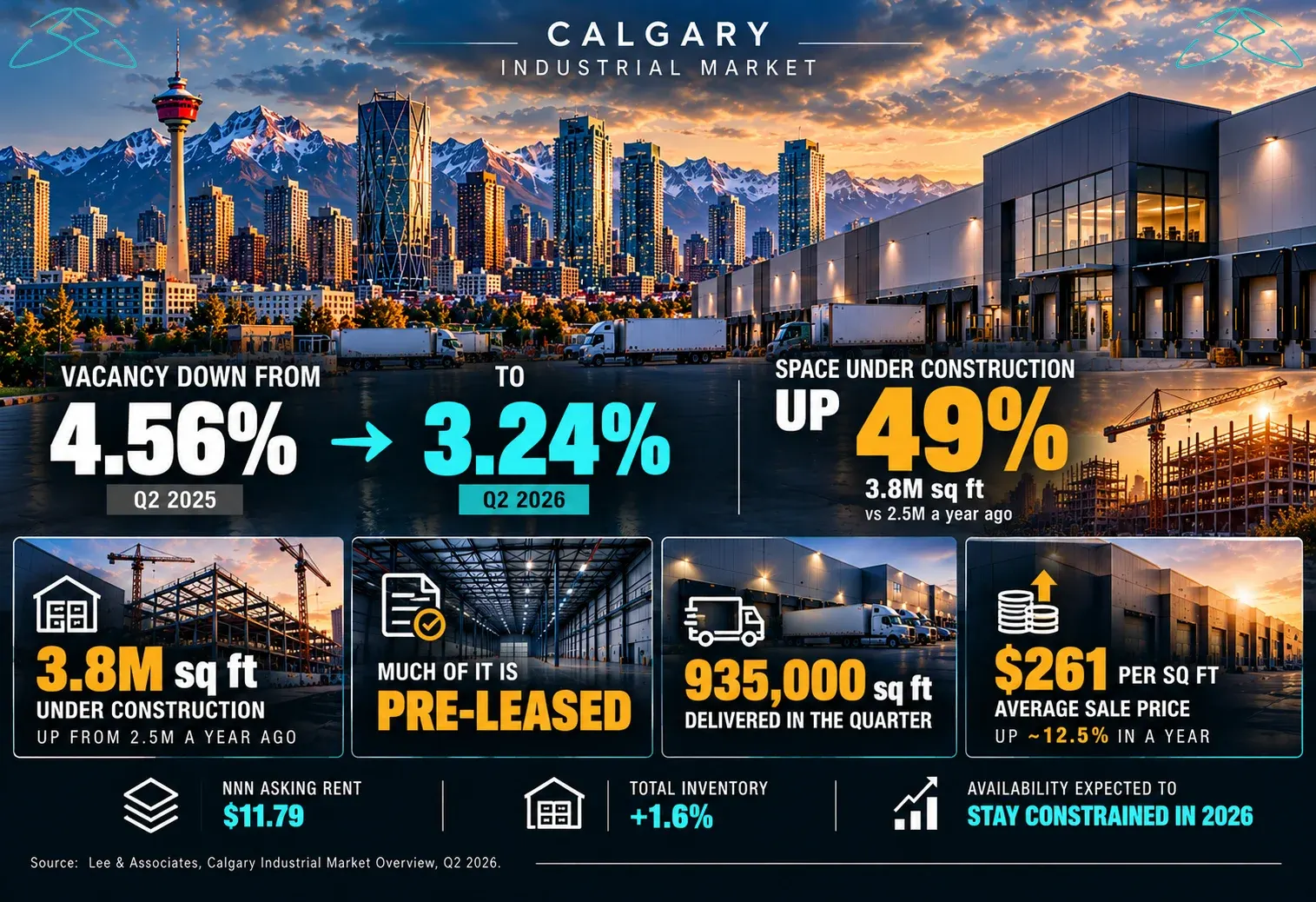
Energy, utilities and transportation projects, including light rail in Calgary and Edmonton and pipeline investment, support engineering construction, which BuildForce expects to grow about 10% by 2035.
This is rotation, not cooling
BuildForce describes the residential change as a moderation from peak levels rather than a significant contraction, while non-residential investment rises almost continuously through the decade. The total volume of construction work in Alberta remains high; its composition is changing.
What the rotation means in practice
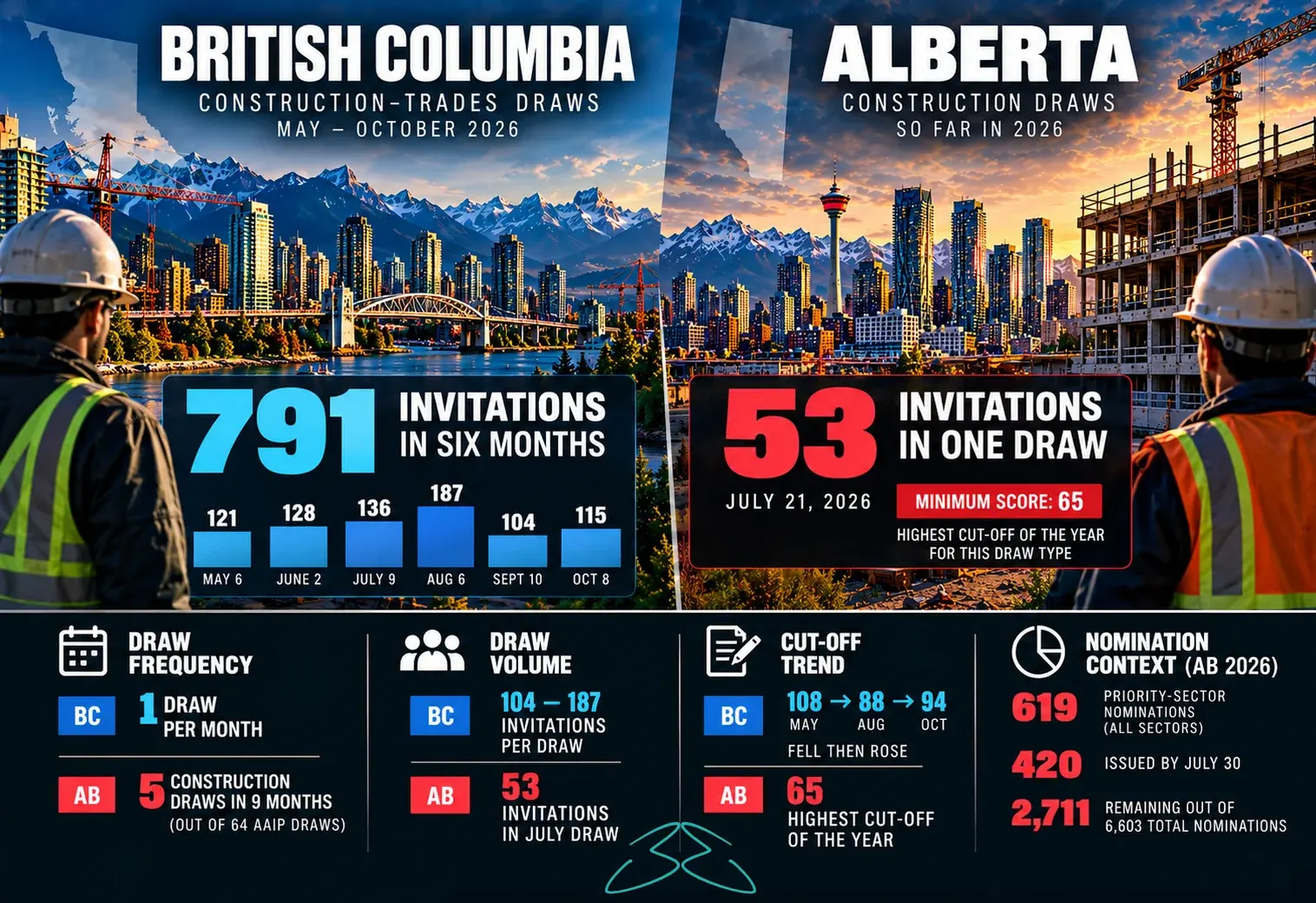
- Trades move: electricians, mechanical trades, steel erectors and civil crews are drawn toward large non-residential projects, keeping residential labour costs elevated even as housing starts fall.
- Skills change: institutional and industrial work requires different safety programs, quality systems, documentation and commissioning capability.
- Procurement changes: public and large private owners use prequalification, technical scoring and collaborative models rather than lowest price alone.
- Supply chains tighten: electrical equipment, transformers and mechanical systems for data centres and hospitals have long lead times.
How to reposition in the next 18 months
Reallocate feasibility work
Consultants and developers can redirect feasibility and site analysis toward institutional, seniors housing, mixed-use and industrial projects where demand is growing.
Build bidding capacity for non-residential work
Prequalification packages, safety records, bonding capacity and references for comparable projects take time to prepare. Start now.
Form partnerships
Residential builders can partner with ICI contractors on specific packages; designers and surveyors can join teams pursuing institutional or industrial work.
Invest in documentation and controls
Non-residential owners expect rigorous scheduling, document control, change management and commissioning. These systems are entry requirements, not extras.
Keep a residential option
Residential will recover as approvals fall and population keeps growing. Holding land and approvals while building non-residential capacity balances the portfolio.
Who wins and who waits
Firms that reallocate resources toward where demand is going will have a pipeline in 2027. Firms waiting for a housing rebound will compete for a shrinking slice of residential work, against more competitors, at lower margins. The demand did not disappear; it moved.
Risks in the non-residential shift
The rotation is not risk-free. Data centre demand depends on power availability, technology investment cycles and grid approvals, and the AESO queue includes many projects that will not proceed. Public capital depends on provincial finances, which are under pressure from lower oil prices. Large industrial projects are lumpy and can be delayed. Firms entering these sectors should diversify, avoid overcommitting to a single client or project type, and price long-lead and power-related risks carefully.
A note on regional centres
The rotation also has a geographic dimension. Large non-residential projects are often located outside the two big cities: data centres in counties with land and power access, hospitals and schools in growing regional centres, and energy projects in the north. Contractors willing to work in Sturgeon County, Red Deer or Grande Prairie may find less competition than in Calgary or Edmonton, though they must plan for workforce accommodation and longer logistics.
Signals that the rotation is accelerating
Watch for tender announcements from health and education ministries, AESO connection approvals for large loads, final investment decisions on industrial projects and prequalification calls from major contractors. When these signals multiply while residential starts keep falling, the rotation is deepening, and firms still focused only on housing should accelerate their repositioning.
The bottom line
For anyone in Alberta real estate or construction, the strategic question for the next 18 months is not when residential recovers, but whether you are positioned where demand is actually going: institutional, power, industrial and the infrastructure behind them.
If you want help repositioning feasibility or project controls toward non-residential work, see my construction project management services, read about ICI growth in Alberta, or contact me. Where are you seeing the rotation hit hardest?
Frequently asked questions
Is construction slowing in Alberta?
Residential construction is moderating from record levels, but non-residential construction, especially institutional, power and industrial work, is growing.
How big is the data centre pipeline in Alberta?
About 19,565 MW of new data centre load was seeking connection on AESO’s large-load list in July 2026. These are requests, not approvals.
Which construction sectors will grow in Alberta?
BuildForce Canada projects ICI building employment up 31% and engineering construction up 10% by 2035.
Sources
- CMHC: Housing starts, May 2026
- BuildForce Canada: Alberta outlook 2026 to 2035
- Government of Alberta: AI data centres by the numbers
- Government of Alberta: Capital plan
- 130 views
- 0 Comment

Eros Belotti 01.

Eros belotti
Construction project manager with over 20 years of experience in Europe and the Canary Islands. Specialized in modular housing, container construction, real estate development and international project management. Founder of Reforma Vivienda Tenerife and Donkey Lab.