
- Alberta
- Alberta Construction
- Alberta Economy
- Alberta Real Estate
- Business Development
- Calgary Real Estate
- Canada Construction
- Construction Canada
- Construction Management
- Feasibility
- Housing Starts
- HousingMarket
- New Builds
- Project Management
- Property Development
- Real Estate Canada
- Real Estate Development
- Real Estate Investing
- Urban Development
Building Permit Delays in Alberta: Why Incomplete Applications Cost Months
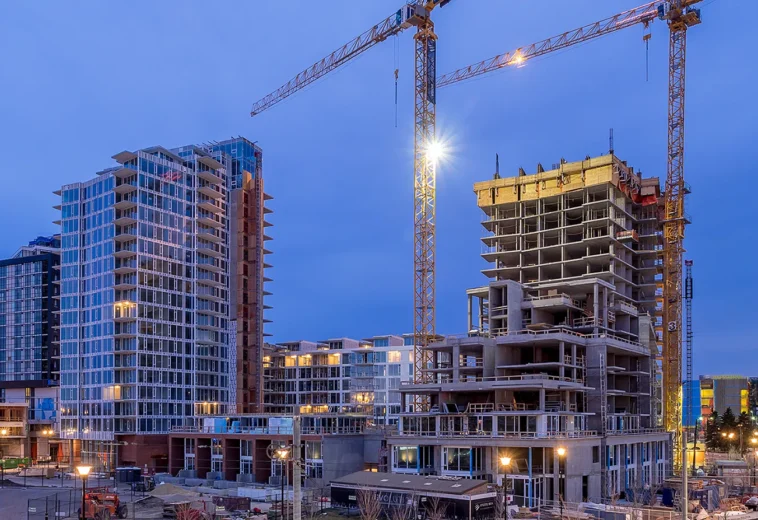
Waiting for a building permit is one of the most frustrating parts of any construction project. Owners blame the municipality, contractors blame the designers and everyone loses weeks. But a large share of permit delays have nothing to do with how fast the city works. They come from applications that are not complete when they are submitted.
This article explains how the permit review process works in Calgary, what happens when an application is incomplete, and how to prepare a submission package that moves through review the first time.
How Calgary handles incomplete applications
The City of Calgary’s Advisory B23-005 sets out clearly what a complete building permit application must contain and what happens when it does not:
- At prescreen, if required information is missing, the applicant receives written notice and has 30 days to provide it. If it is not received, the application may be refused.
- During detailed review, the applicant receives written notice of missing information and has up to 90 days in total to respond, with reminders at 30 and 60 days. After that, the permit may be refused.
In other words, an incomplete application does not simply wait in a queue. It goes back to the applicant, and the clock effectively restarts every time something is missing. Trade permits in Calgary also go through a completeness check before they are assigned to a Safety Codes Officer.
What a complete application requires
According to the same advisory, drawings must include enough detail to convey the entire scope of the intended work, and must cover all areas regulated by the National Building Code (Alberta Edition), including mechanical, plumbing, electrical, washrooms and fire ratings. Documents must be organised according to the city’s digital submission criteria, and where the code requires it, plans must be designed and stamped by an architect or professional engineer.
The city publishes prescreen requirement lists and guides for each application type. Experienced applicants use these lists as a checklist before submitting, not after receiving a deficiency notice.
The most common reasons applications come back
- Drawings that show design intent but not code compliance: missing fire separations, spatial separation calculations, egress widths or guard details.
- Missing disciplines: architectural drawings submitted without mechanical, plumbing or structural information required for the scope.
- Inconsistent documents: floor areas, occupancies or room names that differ between drawings and forms.
- Missing professional stamps where the code requires a registered professional.
- Existing conditions not documented on renovation and change-of-use projects.
- Poorly organised digital files that do not follow the municipality’s upload requirements.
Who is most affected
First-time developers, homeowners acting as their own general contractor and small contractors are hit hardest. Experienced project managers and designers know what reviewers look for and submit packages that answer the questions before they are asked. Everyone else learns through deficiency notices, which can add weeks or months to a schedule.
This is not a broken system. Municipal reviewers are responsible for public safety and cannot approve what they cannot verify. But it rewards preparation, and that is something every applicant can control.
How to prepare a permit package that moves
1. Confirm the permit path early
Determine whether the project needs a development permit, a building permit or both, which trade permits apply and whether a registered professional is required. The answer shapes the whole design schedule.
2. Survey existing conditions
For renovations and additions, measured as-built drawings prevent reviewers from questioning dimensions, separations and structure.
3. Use the city’s checklists
Go through the prescreen and complete application lists line by line. If an item does not apply, say so on the drawings.
4. Coordinate all disciplines before submission
Architectural, structural, mechanical and electrical information should be consistent. A quick internal coordination review catches most contradictions.
5. Write a clear cover letter
Summarise the scope, occupancy, building area, code analysis and any alternative solutions. Reviewers appreciate a package that explains itself.
6. Respond fast to comments
When questions do arrive, respond completely and quickly. Partial answers lead to further rounds of review.
The cost of a two-month delay
Permit delays are not only frustrating; they are expensive. Every month of waiting adds financing interest, holding costs, insurance and, on construction loans, possible extension fees. Trades booked for a start date move to other projects, and in Alberta’s tight labour market they may not be available again for weeks. Materials ordered in advance need storage, and price escalation continues. For a small developer, two months of delay on a mid-size project can easily cost more than the entire fee for preparing a proper permit package.
Edmonton and other municipalities
Each Alberta municipality has its own forms, digital portals and review practices, but the principle is the same everywhere: complete, coordinated and code-compliant submissions move faster. Rural municipalities and smaller towns may rely on accredited agencies for safety codes review, which adds another party to coordinate. Checking requirements with the authority having jurisdiction before design is finished is always time well spent.
The bottom line
Filing an application does not mean the package is ready. Preparation does. Most permit delays are decided before submission, by the completeness and clarity of the documents. The question to ask is not “did I file?” but “is my submission truly complete?”
If you are planning a project in Alberta and want a second read on your permit drawings before you file, see my CAD drafting and permit documentation services or contact me.
Frequently asked questions
What happens if my Calgary building permit application is incomplete?
You receive written notice. At prescreen you have 30 days to provide missing information; during detailed review you have up to 90 days in total. If information is not provided, the permit may be refused.
Do I need an architect or engineer for my permit?
It depends on the building type, size and scope. Where the National Building Code (Alberta Edition) requires it, plans must be designed and stamped by a registered professional.
How can I speed up my building permit?
Submit a complete, coordinated package that follows the municipality’s checklists, includes all required disciplines and answers code questions on the drawings.
Sources
- City of Calgary Advisory B23-005: Building permit complete application
- City of Calgary: Inspections and timelines
- 146 views
- 0 Comment

Eros Belotti 01.

Eros belotti
Construction project manager with over 20 years of experience in Europe and the Canary Islands. Specialized in modular housing, container construction, real estate development and international project management. Founder of Reforma Vivienda Tenerife and Donkey Lab.