

//Why Canada Risks Losing Entrepreneurs in 2026: The Start-Up Visa Pause Explained
Why Canada Risks Losing Entrepreneurs in 2026: The Start-Up Visa Pause Explained

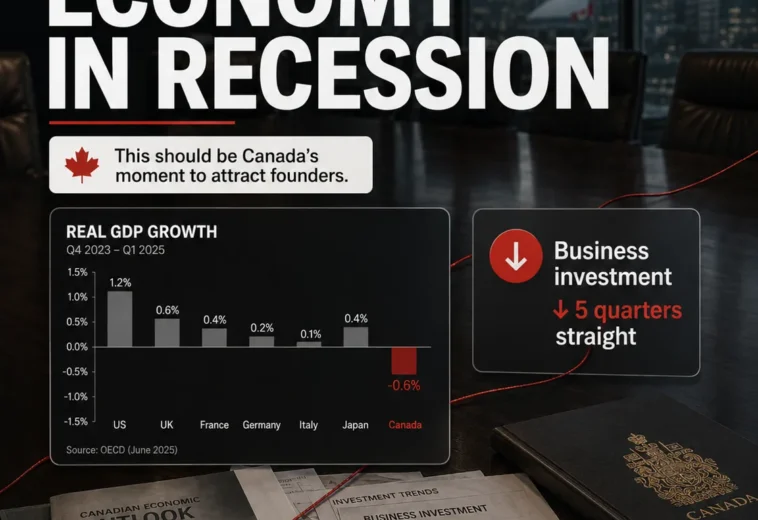

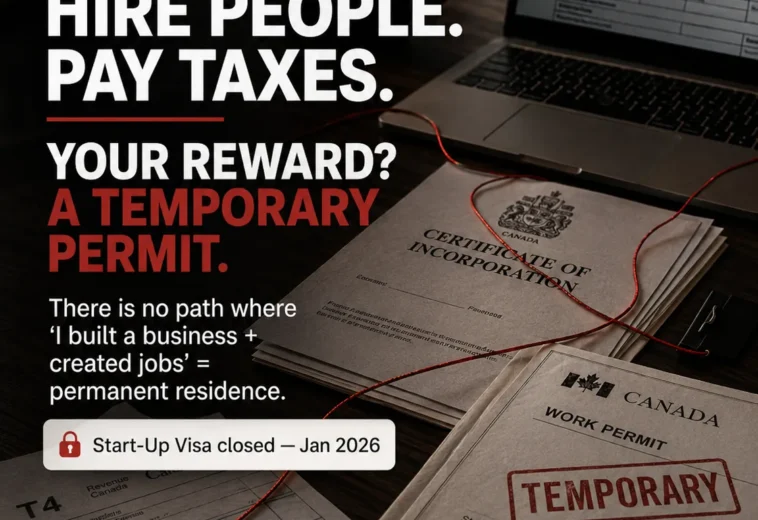


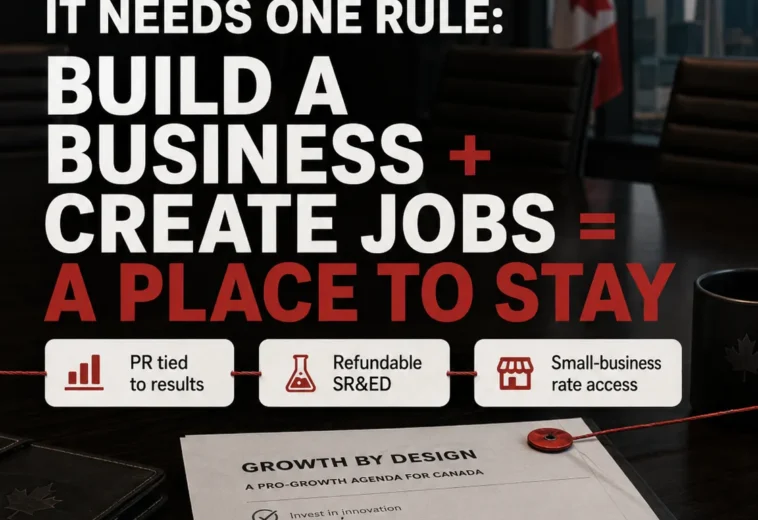

Trade tensions with the United States have pushed many founders and companies to rethink where they build their businesses. For Canada, that could be an opportunity to attract entrepreneurs looking for stability and access to North American markets. Yet in 2026, Canada’s main dedicated pathway for immigrant founders is closed while a replacement is designed. Critics argue that Canada is missing a rare window to attract job creators; supporters of the changes argue that the old system had serious backlogs and integrity problems that needed fixing.
This article reviews the facts, the main arguments on each side and what founders considering Canada should know today.
What changed in Canada’s business immigration
According to CIC News and Immigration.ca:
- Start-up Visa (SUV): intake of new applications ended on December 31, 2025. Applicants with a valid 2025 commitment certificate from a designated organisation had until June 30, 2026 to apply.
- SUV work permits: IRCC stopped accepting applications for the optional SUV work permit, except extensions for people already in Canada.
- Self-Employed Persons Program: paused since April 30, 2024, with the pause extended until further notice.
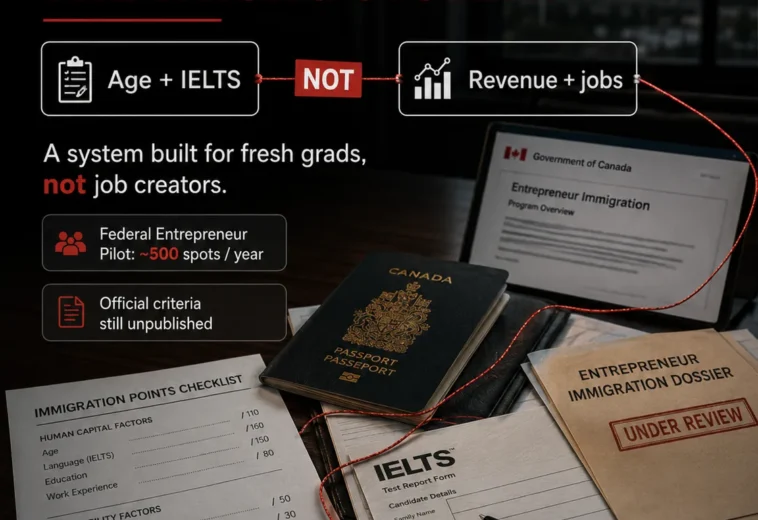
- Replacement: IRCC’s 2026-27 Departmental Plan announced a new “high impact” Start-Up Visa pilot focused on stronger economic outcomes. As of spring 2026, eligibility criteria and intake levels had not been published.
The government said the changes respond to the large inventory of business immigration applications. In 2025, IRCC’s processing-time tool showed an estimated wait of around ten years for permanent residence through the SUV.
The argument that Canada is losing founders
Critics, including many founders and immigration advisers, make several points:
- No clear path from business success to residence. With the SUV closed and the self-employed stream paused, founders who build companies, hire staff and pay taxes in Canada often depend on temporary permits or general economic programs designed mainly for employees and recent graduates.
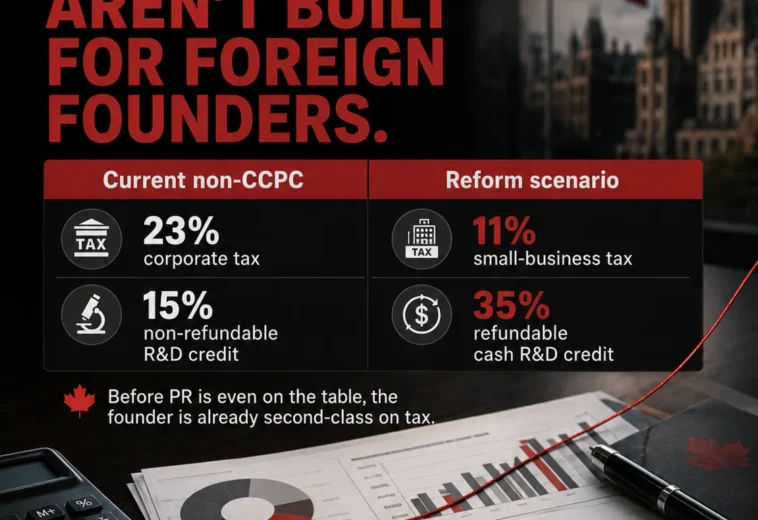
- Tax advantages tied to Canadian control. Canada’s most attractive small-business tax benefits, including the federal small business rate of 9% on qualifying active business income and the enhanced 35% refundable Scientific Research and Experimental Development (SR&ED) credit, are available to Canadian-controlled private corporations. A company controlled by non-residents may not qualify until its founders become residents.
- Timing. Trade uncertainty in the United States could make Canada attractive to mobile entrepreneurs, but uncertainty about Canada’s own pathway may push them elsewhere.
The core proposal from this side is simple: reward results. If a founder builds a business, creates jobs and pays taxes, there should be a clear route to permanent residence.
The argument for the pause
Supporters of the changes point to real problems with the previous system:
- Backlogs: waits of up to a decade served neither founders nor Canada.
- Program integrity: business immigration programs worldwide have been used by some applicants mainly as an immigration route rather than to build viable companies, and oversight of designated organisations was a concern.
- Better targeting: a redesigned pilot can focus on high-growth companies with stronger evidence of economic impact.
- Overall immigration levels: the federal government has reduced overall immigration targets in response to housing and service pressures, which affects all programs.
What founders can do now
Monitor the new pilot
Details of the high-impact Start-Up Visa pilot may be released during 2026 or later. Founders should follow IRCC announcements and consult licensed advisers.
Consider provincial programs
Several provinces, including Alberta, operate entrepreneur streams under their Provincial Nominee Programs, some aimed at rural communities or graduates. Requirements and availability change frequently, so check current rules.
Evaluate work permit options
Some founders enter through intra-company transfers, owner-operator work permits or other routes, then qualify for permanent residence through general economic programs.
Structure the company carefully
Corporate structure affects tax treatment and eligibility for incentives. Professional tax and legal advice before incorporating is essential.
Why it matters for the economy and construction
Entrepreneurs create companies that rent offices, build facilities, hire staff and invest in equipment. Business investment is a driver of commercial and industrial construction, and provinces such as Alberta are actively trying to attract investment in technology, data centres and manufacturing. A clear, credible pathway for founders is part of that competitiveness, alongside tax policy, infrastructure and labour supply.
A personal perspective
As a European entrepreneur who has founded and run companies in several countries, I see both sides. Founders need predictable rules and a realistic timeline; governments need programs that deliver real economic value and cannot be easily abused. The best systems do both: they set clear, measurable conditions (investment, jobs, revenue, taxes paid) and reward founders who meet them with a defined path to residence. Whatever shape Canada’s new pilot takes, that clarity will determine whether it attracts the entrepreneurs the country wants.
What a good founder pathway could include
Whatever its final design, observers suggest that an effective program would combine clear eligibility criteria, predictable processing times, measurable milestones such as jobs created and revenue, credible oversight of the organisations that endorse founders, and a defined route to permanent residence once milestones are met. Transparency about intake levels would also help founders plan their move.
The bottom line
Canada has paused its main founder pathways while it designs a replacement. Critics see a missed opportunity to attract entrepreneurs during a period of trade disruption; supporters see a necessary reset after years of backlogs. For founders, the practical message is to follow the new pilot closely, explore provincial and work permit options and plan company structure carefully.
If you are an entrepreneur or investor exploring construction or real estate projects in Alberta, see my services or contact me. Do you think business success should lead directly to permanent residence?
Frequently asked questions
Is Canada’s Start-up Visa program closed?
New applications closed on December 31, 2025, with a June 30, 2026 deadline for holders of valid 2025 commitment certificates. IRCC plans a new high-impact Start-Up Visa pilot.
Is the Self-Employed Persons Program open?
No. It has been paused since April 30, 2024, and the pause was extended until further notice.
Do foreign-controlled companies get the same tax benefits in Canada?
Not always. Key benefits such as the small business tax rate and the enhanced refundable SR&ED credit apply to Canadian-controlled private corporations. Professional advice is recommended.
Sources
- CIC News: Canada closes Start-up Visa Program (December 2025)
- Immigration.ca: Canada plans high-impact Start-Up Visa pilot (March 2026)
- 137 views
- 1 Comment

Eros Belotti 01.

Eros belotti
Construction project manager with over 20 years of experience in Europe and the Canary Islands. Specialized in modular housing, container construction, real estate development and international project management. Founder of Reforma Vivienda Tenerife and Donkey Lab.




July 14, 2026 /
Before anyone comments “we don’t want rich people buying passports” — read again. Canada isn’t a tax haven. These founders would pay full Canadian tax and create jobs. You’re not turning away money launderers, you’re turning away taxpayers. That’s what makes it insane.
So genuinely: name me one other G7 country asleep enough to do this. 👇